Operational intelligence for warehouses
Know exactly where
your warehouse loses time.
On the floor, time is money.
Your WMS records scans, not what happens between them. Orbit uses existing camera feeds to detect delays, congestion and operational bottlenecks, then connects them to the KPIs your team manages.
The gap
Between two WMS scans, you're blind.
Your WMS knows a pallet was scanned in and scanned out. Everything in between — the waiting, the re‑walks, the blocked aisle — never gets logged. Managers run large shifts on memory and gut feel.
Orbit closes that gap with a live record of what happened in each zone, and what it meant for throughput and cost.
Observe the operation
Orbit analyses your existing camera feeds and lightweight sensor data. No wearables, no integration marathon.
Detect operational events
Delays, congestion, dwell times, blocked zones and unlogged movements become structured, timestamped events.
Explain the impact
Managers see the location, timestamp, evidence, affected KPI and estimated operational cost.
Orbit measures processes, zones and operational flow — not individual employee performance.
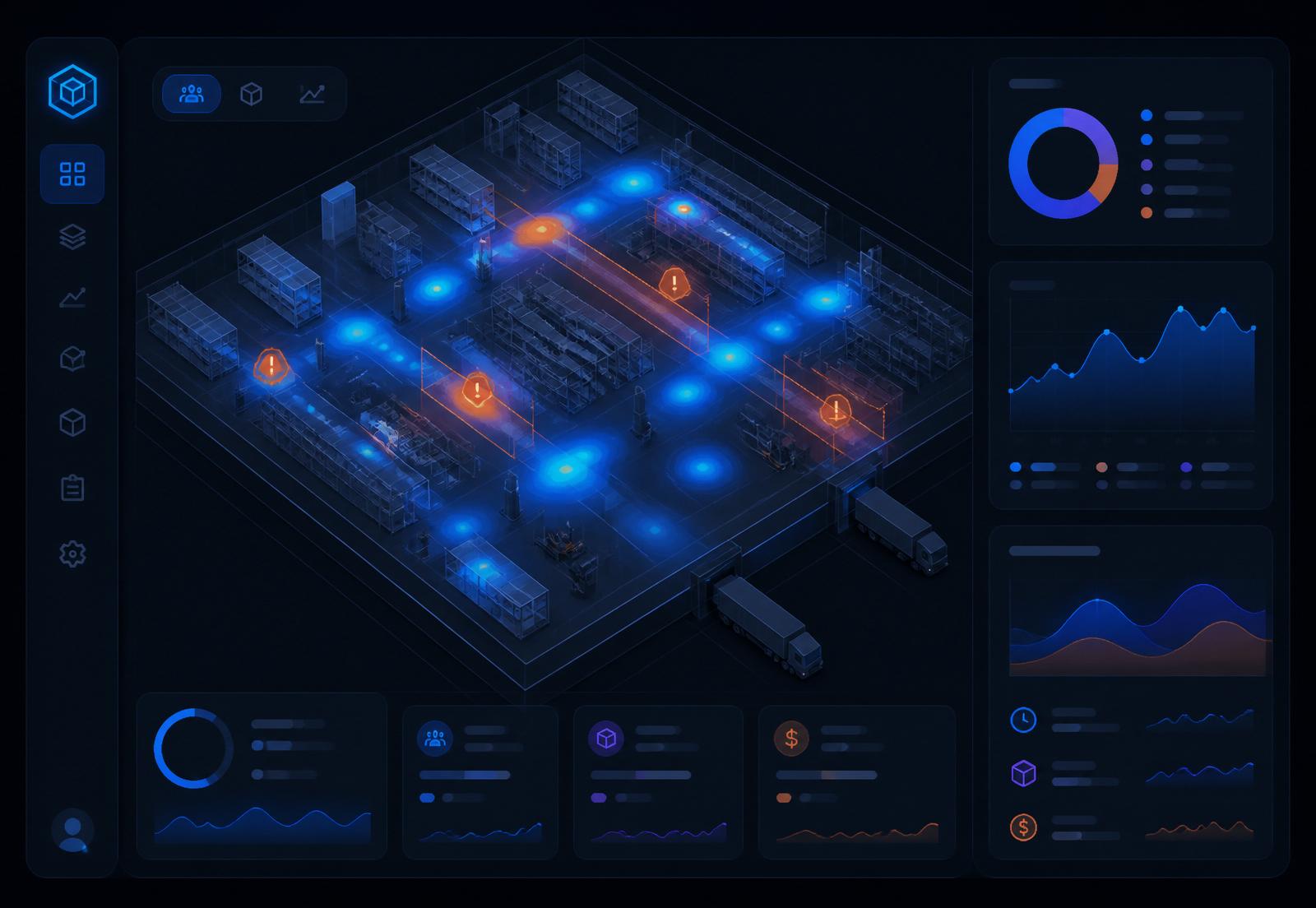
Initial workflows being validated with design partners
Three things Orbit measures first.
Dwell and waiting time
See where goods or equipment remain stationary longer than expected.
Congestion and process flow
Identify blocked zones, repeated re‑walks and movement bottlenecks.
Shift and process comparison
Compare operational patterns between shifts and verify whether process changes improved performance.
Where we are
First warehouse test planned for September 2026.
We're preparing a deployment with a design partner in a designated test area of their warehouse: real cameras, real shifts, real data. A small number of additional sites are still open.
Customer interviews
Fulfilment‑centre visits
Facility‑management providers interviewed
Design partnerships
Our direction
Facilities improve in stages.
Facilities do not move directly from manual operations to full automation. They improve in stages — from better visibility and process redesign to partial automation and robotics. Orbit provides the operational evidence needed to decide what to improve first, and where automation will produce a measurable return.
Get started
Show us one aisle.
We'll show you what Orbit could measure.
30 minutes with a founder. No sales deck. We walk your floor with you and show what Orbit would detect in the first week.